RATIONAL Combi Oven: No Steam
A combi that will not steam can be a water-supply condition, a care or service message the kitchen has been dismissing, a mode selection, or a real steam-side fault. Telling them apart before the visit saves a service call.
What the symptom actually tells you
Combi ovens are judged by the food, and a steam problem usually shows up first as a result that is wrong rather than as an alarm. Product coming out dry, a proving or low-temperature steam programme that will not hold, or a combination programme that browns but does not moisten are all reported as no steam, and they are not necessarily the same fault.
The single most misleading test in a busy kitchen is looking at the vent. Visible vapour depends on cabinet temperature, load, ambient air and vent condition, and a unit that is steaming correctly can show almost none of it while a unit with a genuine fault can still show some. Judge the machine by mode behaviour and by whether it reports anything, not by the plume.
Generation matters. SCC and SelfCookingCenter units, CombiMaster units and the later iCombi range present modes, water and care information differently, and their control interfaces are not interchangeable. Instructions written for one generation can reference a screen or a routine the other does not have, which is why the model and generation from the rating plate comes before anything else. Floor-standing and tabletop units differ again, and a manual for one size and market does not describe the electrical or cleaning specification of another.
Two things are worth recording before the visit. First, which modes still work — an oven that roasts normally and fails only in steam is a narrower question than one that underperforms everywhere. Second, whether a cleaning or care cycle was interrupted, at which stage it stopped, and whether it can be restarted; an interrupted cycle can leave the oven in a state that shapes what happens next.
KONGRA LLC is an independent service company and is not affiliated with, endorsed by or authorized by RATIONAL. Diagnosis is a paid on-site visit with instruments and manufacturer service data, followed by a written estimate; repair proceeds only after approval.
Which pattern matches what you are seeing
These are categories to narrow the question before a visit, not a remote diagnosis. Confirmation requires on-site measurement.
- Steam mode selected but the food result is drySeparates a real steam-side performance question from a mode-selection or programme question. Worth confirming which mode was actually running and at what setpoint.
- Hot-air modes normal, steam and combination modes underperformHelps focus attention on the steam side rather than on general heating. It does not by itself clear the controls or sensors, which can affect steam behaviour alone.
- Nothing performs correctly in any modePoints at something common to the whole unit — power, control, or a general condition — rather than the steam circuit specifically.
- A water, care, cleaning or service message appears or has been dismissedThe control is already reporting something. Photograph the message exactly as displayed rather than paraphrasing it; an exact message can guide the diagnosis, where a paraphrase usually cannot.
- Started after a water supply interruption, filter change or plumbing workPuts supply pressure, isolation valves, filtration and water treatment ahead of internal components in the order of investigation.
- Behaviour is intermittent — some cooks fine, others notIntermittency usually correlates with something: time of day, load size, which programme, or how long since the last care routine. Note what it correlates with.
- Visible vapour at the vent has decreasedOn its own this is not evidence of a fault and should not be used to decide anything. Record it, but weight the mode behaviour and any displayed message far more heavily.
What you can safely observe yourself
These are normal operator actions and external checks only. They use the controls the machine is designed to be operated with.
- Confirm which mode and setpoint were actually selected when the problem appeared
- Report which modes were already in normal use when the symptom appeared; do not start additional test cycles when there is a water, safety or service warning
- Photograph any message, code or icon on the display exactly as it appears
- Check the water supply isolation valve to the oven is fully open
- Ask whether building water was shut off, a filter was changed or plumbing work was done recently
- Note when the last care or cleaning routine was run, and whether it completed
- Check the drain area is not obstructed and the appliance is not standing in water
- Record the model and generation from the rating plate, including whether it is a SelfCookingCenter or an iCombi
- Do not run a live test, forced routine or service-mode sequence to try to reproduce the fault
- Do not open the steam generator, boiler compartment or any panel
- Do not run an unscheduled descale, or use any descaling product or method not specified for your model
- Do not follow a generic online descaling recipe — combi care chemistry is model-specific
- Do not bypass, jumper or defeat any interlock, switch or safety device
- Do not dismiss a displayed message before photographing it
What requires a technician on site
- Water supply pressure, flow and treatment condition measured at the appliance
- Steam generation behaviour observed and measured against the model's service data
- Level, fill and drain control operation on the steam side
- Heating element and control-circuit condition measured, not inferred
- Scale and water-quality condition assessed against the manufacturer's stated requirements
- Stored fault information read from the control against RATIONAL service documentation
- Venting, drainage and installation conditions that affect steam performance
- SelfCookingCenter and iCombi generations differ in controls and steam-side construction; the rating plate determines which guidance applies
- Gas-heated units involve regulated work performed only within KONGRA's legal license, insurance and practical service scope
- Water treatment system design and building plumbing modification are not KONGRA services
- Consumables, care products and filter cartridges are supplied to the manufacturer's specification, not substituted
- KONGRA is not affiliated with, endorsed by or authorized by RATIONAL; the name identifies the equipment serviced
What to send with your request
The more of this arrives up front, the more useful the first visit is.
- Model, generation and serial number from the rating plate
- Whether hot-air modes behave normally while steam modes do not
- A photograph of any displayed message, code or icon
- When the last care or cleaning routine ran and whether it completed
- Any recent water shutoff, filter change or plumbing work
- Whether the fault is constant or intermittent, and what it correlates with
- Your service window — most commercial kitchens need work scheduled around service hours
Real KONGRA equipment documentation
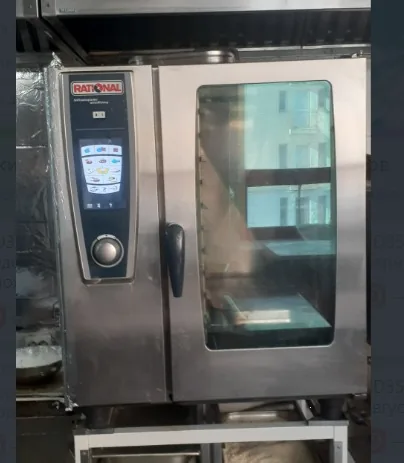
Installed RATIONAL combi oven documented in a commercial kitchen. Diagnosis and repair scope follow an inspection.
This photograph documents a RATIONAL SelfCookingCenter combi oven in a commercial kitchen as installed equipment context only. It is a SelfCookingCenter unit, not an iCombi, so it does not illustrate the iCombi controls referenced above. It is not a record of a steam-side repair, and no diagnosis or outcome for the fault described on this page is implied by it.
Manufacturer references
- RATIONAL — iCombi Classic original operating instructions (PDF)iCombi Classic 6-1/1, 6-2/1, 10-1/1 and 10-2/1. Not applicable to SelfCookingCenter units — use the manual supplied with your model.
- RATIONAL — iCombi Pro 20-1/1 and 20-2/1 original instructions, UK (PDF)iCombi Pro floor units 20-1/1 and 20-2/1, UK edition V17, January 2026. Cited for general explanation only; its electrical and cleaning specifications are not transferable to US or tabletop machines.
Relevant service pages
Frequently asked questions
There is no visible steam coming out of the oven. Does that mean the steam function has failed?+
Not on its own. Visible vapour at the vent is not a measure of steam generation — it depends on the cabinet temperature, the load, the ambient air and the vent condition, and a correctly steaming oven can show very little of it. What matters is whether the cooking result is right, whether the control reports a fault, and whether the unit behaves the same in a pure steam mode as it does in a combination mode.
Does it matter whether we have a SelfCookingCenter or an iCombi?+
Yes, quite a lot. SelfCookingCenter and iCombi generations differ in control interface, in how modes are selected and named, in how water and care messages are presented, and in how the steam side is built. Guidance written for one generation can describe controls the other does not have. The model and generation from the rating plate is the first thing to establish.
Hot air cooking works normally. Is that useful information?+
It is one of the most useful things you can report. If hot-air modes run and hold temperature normally while steam and combination modes do not, that helps focus attention on the steam side. It does not conclusively clear the controls, sensors or power supply, because those can affect steam behaviour without disturbing a hot-air cook — but it does change what is measured first on site.
Do we need a descale before booking?+
Do not run a care or descale routine as a way of testing the fault. Run care programmes only on the schedule and with the products your manual specifies for your model; normal scheduled care remains fine. An unscheduled routine mid-fault takes the unit out of service for hours, changes the conditions the technician needs to observe, and on some controls may alter stored information.
Water was shut off in the building last week. Should we mention it?+
Yes, always. A supply interruption, a changed filter, a new water treatment cartridge, work on the building plumbing or a closed isolation valve are all directly relevant to steam performance and are frequently the last thing anyone thinks to mention.