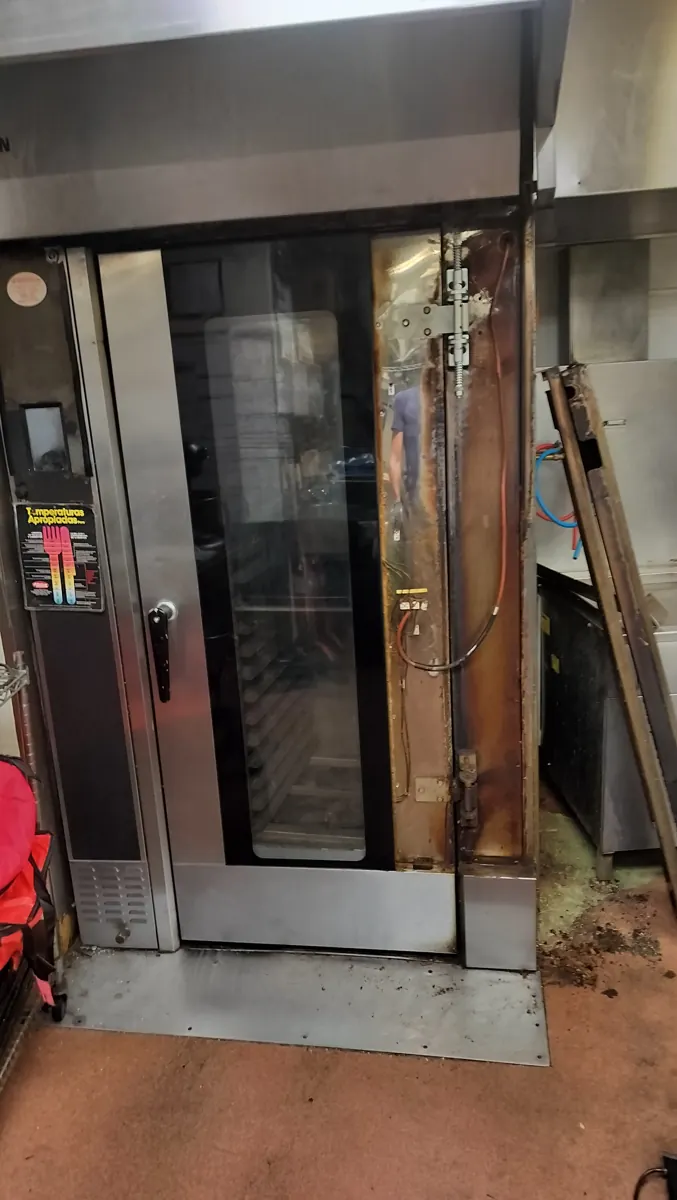
Rack ovens face repeated thermal and mechanical cycling. Diagnosis separates heat, airflow, rack movement and door sealing so the proposed repair addresses the observed fault.
Heat-side checks cover burner and ignition sequence, thermostat and thermopile behavior, elements and contactors on electric ovens, and calibration measured against real chamber temperature rather than the display.
Rotation checks cover the drive motor and gearbox, chain, coupling or carousel engagement, hook alignment, and the door interlocks designed to stop rotation.
Sealing and airflow — door hinges and gaskets, damper and vent behavior, blower condition, steam tubes and scale — usually explain the pale-top / dark-bottom complaints bakers describe.
Rotation complaints are worth describing precisely, because lift, rotation, heating and programme stage are separate behaviours that share one display. Ovens are also documented individually: Baxter OV500 and OV520 manuals present rotation and lift alerts differently, so the exact message and the model are recorded rather than matched to a generic code list. The separate guide on a rack that will not rotate sets out what to capture before the visit.
Sveba-Dahlen and Gemini equipment are examples of rack ovens serviced; KONGRA is independent and not authorized by any manufacturer.