Commercial Dishwasher Repair
Diagnostics and repair for undercounter, door-type / hood, conveyor and glasswashers — high-temp and low-temp sanitizing systems.
Commercial dishwasher problems we diagnose
CMA dishwasher: draining and washing are separate checks
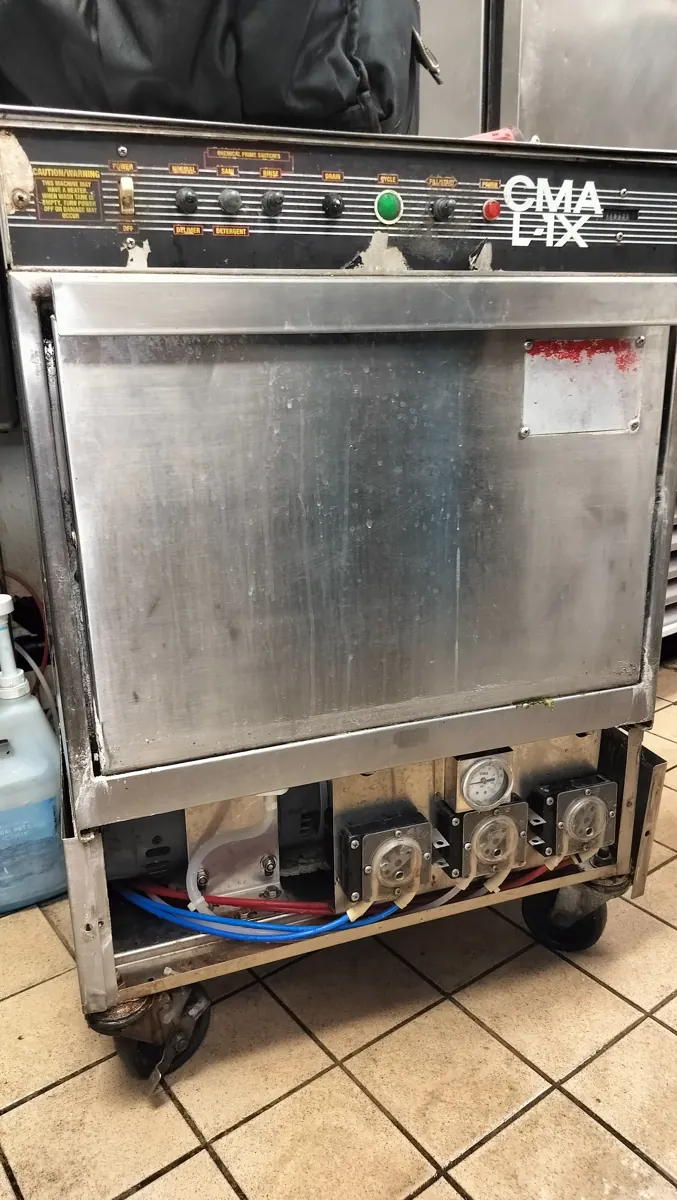
A CMA commercial dishwasher photographed during service with the lower access panel removed and chemical-dispensing components visible.
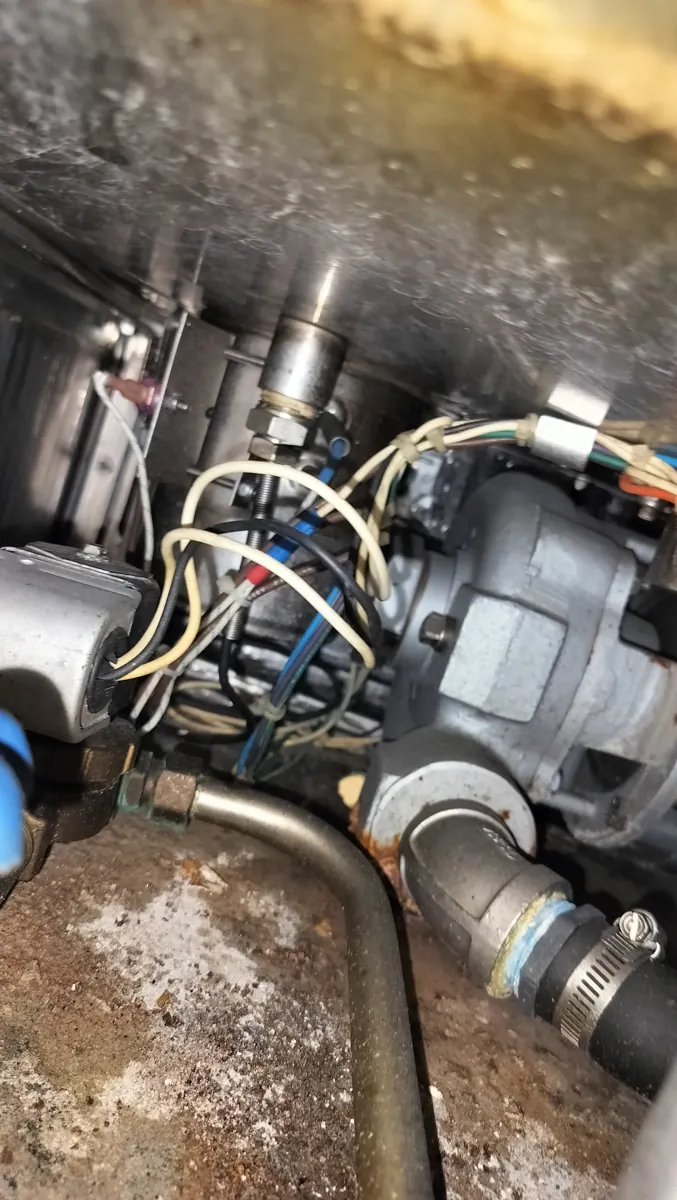
The internal service view records the pump, drain hardware, hoses and connections. These components perform different jobs during the wash and drain stages.
Water left in the tank and dishes that come out dirty can involve different systems. On the CMA undercounter family shown here, the wash-pump assembly and drain-valve assembly are distinct components. Restoring drainage alone does not establish that wash circulation is working. Diagnosis follows the fill, wash and drain stages, then checks the required sanitizing conditions for the specific machine. The photos document service access; they do not establish a completed repair.
When arranging a visit, describe whether water remains after the drain command, whether the wash stage sounds different, and whether poor cleaning affects every rack. This is more useful than assuming every symptom means a failed pump.
CMA manufacturer reference: pump and drain assembliesWhy two dishmachines behave differently
Warewashing complaints are only useful once the machine's intended behaviour is known. Many machines are built to fill a heated wash tank and retain it through service, emptying at the end of the day; others drain differently. Water standing in the tank at midday can therefore be normal operation on one machine and a fault on the next, so the first thing established on site is what your specific model is documented to do. CMA's EST service and parts manual, for instance, describes that model family's own drain and tank-retention arrangement, while the CMA L-1X and L-1X16 documentation describes a pumped-drain undercounter machine — neither is read across to the other, or to unrelated machines.
Temperature works the same way. A high-temperature machine holds and boosts water to the values in its own manual and its cycle timing is part of that; a chemical-sanitizing machine works to a different arrangement entirely. The CMA-180 installation and operation manual documents that model's holding and cycle behaviour, and applying it to a different machine — or applying a low-temp machine's expectations to a high-temp one — produces wrong conclusions. There is no rule that covers all units.
Manufacturer sources: CMA EST service and parts manual, Rev 1.08C, 09-05-23 (EST models only) and the CMA-180 installation and operation manual, Rev 2.08B (CMA-180 only). Other makes and models are documented separately.
Hobart AM14 and AM15 door-type machines
Door-type Hobart AM14 and AM15 machines are covered on their own page, because suffix and configuration change the controls, the heating arrangement, the dispensing interface and the parts that fit — see Hobart AM14 and AM15 dishwasher repair. The CMA records above remain the documented undercounter case on this page.
Book a warewashing diagnostic
Book Online is the fastest way to reserve a time, and Request Service opens the KONGRA form with your warewashing details.
More commercial services
Read customer reviews
Frequently asked questions
What commercial dishwashers do you service?+
Undercounter, door-type / hood, conveyor and glasswashers — high-temp and low-temp sanitizing.
Do you work with booster heaters?+
Yes, including diagnostics of booster heaters, wash / rinse cycles and chemical dispensing.
Do you service Hobart AM14 and AM15 door-type machines?+
Yes, as an independent service company. Those families have their own page, because the suffix and configuration change the controls, heating arrangement and parts that fit.
What should we send before a visit?+
The complete model and configuration from the data plate, the exact display or indicator text, and whether the problem happens at first use, at peak or on every cycle. Send model details privately with your request.