Paid diagnostic · Estimate after inspection
K
KONGRA
Industrial & Automation

Industrial Equipment Preventive Maintenance in San Jose

Planned maintenance for selected conveyors, drives, blowers, packaging and light production equipment in San Jose, Los Gatos and the Bay Area. Build a service scope around the machines your operation depends on.

Start with the machines that stop the line

  1. Identify critical equipment

    Share exact models, fault history, available backup and the shutdown window. Machines with no backup or difficult parts access come first.

  2. Agree the assessment

    The first on-site assessment is paid. Scope and price are agreed before scheduling; access and isolation arrangements are planned with your team.

  3. Receive a written plan

    The proposal defines model-specific tasks, intervals, responsibilities and corrective priorities. An ongoing agreement starts after its scope is approved.

For restaurants, bakeries and hospitality kitchens, use commercial equipment maintenance. Production and material-handling assets need their own drive, guarding and process review.

Tell us what needs attention

Send your request directly to KONGRA. We reply using your preferred contact method.

Preferred contact method
0/1000

Sending a request does not confirm an appointment.

Real KONGRA work

What conveyor observations add to a service plan

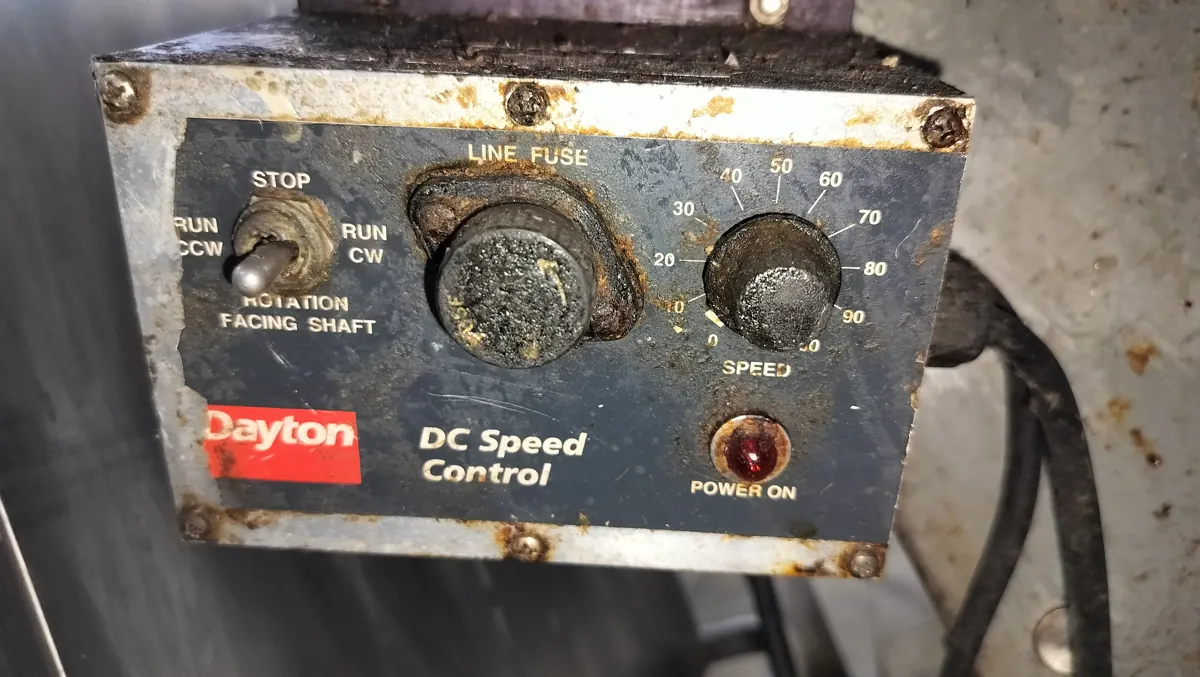
Dayton DC speed control on a commercial tray conveyor, with surface corrosion around the controls.
Equipment inspection
Tray conveyor DC speed control

The installed Dayton DC speed control was photographed with visible surface corrosion. Appearance alone does not establish the electrical cause of a stoppage.

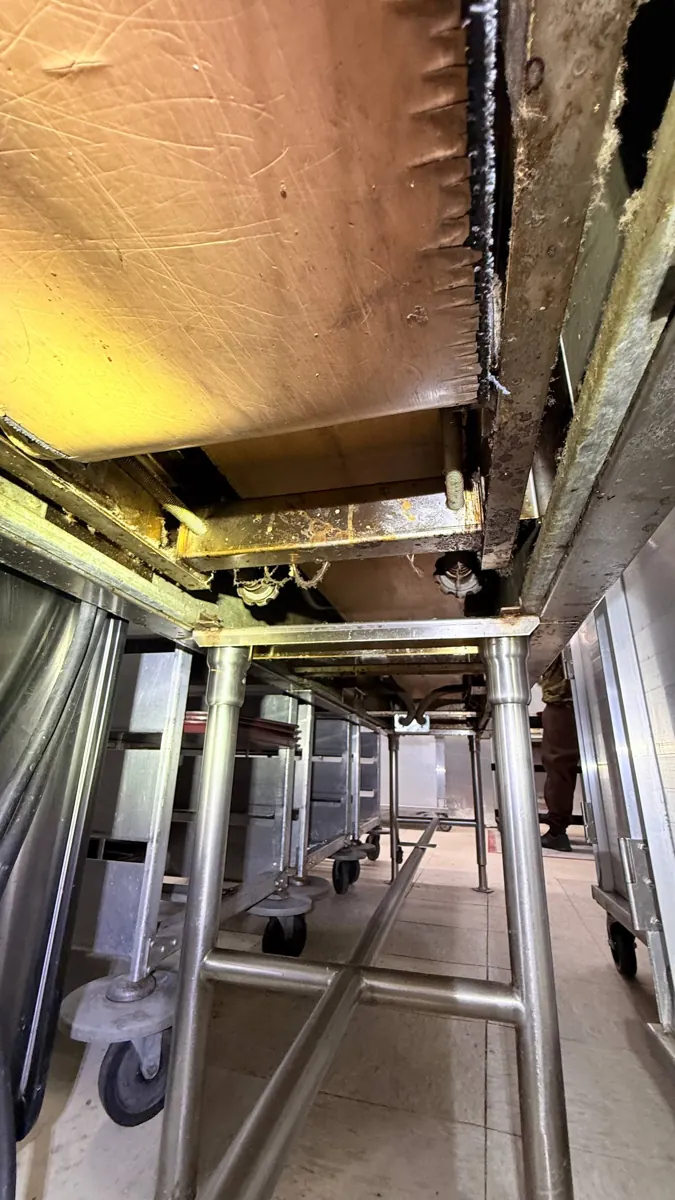
Underside of a commercial tray conveyor showing the belt edge, return path and support frame.
Condition documented
Conveyor belt and return path

An underside inspection documents belt-edge fraying and deposits around the support structure. Belt condition and mechanical resistance are assessed separately from the motor controller.

Control proposal and mechanical condition

A documented tray-conveyor proposal covered DC speed-control replacement and testing under load. The photos also record belt-edge fraying and deposits around the return structure. Controller diagnosis and belt inspection are separate tasks; completed replacement and load testing are not recorded.

Maintenance scope proposed

A conveyor maintenance proposal included belt and return rollers, cleaning, chain and sprocket inspection, reducer oil service, alignment and tension checks, motor and reducer inspection, and safety testing before handover. These were proposed tasks, not a completed maintenance result.

Conveyor service scope and diagnostic patterns

Tasks matched to the machine

Baseline, schedule and handover

  • Identify the asset and revision; document condition and relevant measurements at the first visit.
  • Match tasks to manufacturer instructions, actual duty cycle, environment and failure history.
  • Assign operator observations, qualified service and specialist work; agree access and shutdown arrangements.
  • Record work performed, functional checks, unresolved items and the next action after each visit.

Avoid generic maintenance rules

A universal lubrication schedule can be wrong: some Dorner conveyor components require no lubrication, while an Interroll RollerDrive is a sealed unit that must not be opened. Reducer oil tasks apply only where the fitted reducer’s instructions require them.

Operator observations can flag noise, tracking changes, recurring stops or displayed faults. Work involving moving parts, guarded areas or stored energy requires qualified personnel, planned shutdown and appropriate isolation.

Prepare the equipment record

Use the blank worksheet to record asset identity, operating impact, available backup, access, task sources and handover. Completed records stay with your team.

Maintenance cannot eliminate breakdowns. Response times, parts and corrective work are included only where agreed in writing. Heavy industrial overhauls, high-voltage work and safety-system validation are outside this general service offering; regulated work requires a separate scope review and appropriately licensed specialists.

Independent service. KONGRA LLC is not affiliated with, endorsed by, or authorized by these manufacturers. Brand names are used only to identify equipment we service.

Model-specific reference examples

These manufacturer documents illustrate different maintenance requirements. They are technical references, not evidence of completed KONGRA work; the model, revision and application must match.

Maintenance questions

How are industrial maintenance intervals decided?+

Manufacturer-required tasks and intervals govern. The exact model and revision, duty cycle, environment and failure history determine additional attention. There is no universal monthly service or bearing-lubrication schedule.

Do you monitor our equipment remotely?+

No installed remote-monitoring service is claimed. Where your equipment already provides condition or status readings that KONGRA can interpret, they can inform the assessment; they do not guarantee that a future failure will be detected.

What should we send before an assessment?+

Equipment models, data-plate and normal-display photos where safely accessible, your city, production schedule, critical machines and prior faults. Access and shutdown arrangements are agreed before the visit.

Related industrial services

Discuss your maintenance scope