Maintenance performed
LG dryer: restricted airflow from internal lint accumulation
Internal lint accumulation was found during an LG maintenance visit and restricted the airflow path. Dryer cleaning was performed.
This guide covers vented gas and electric dryers. Heat-pump and ventless machines use different airflow and condensate systems and follow their own manuals.
Drying depends on three things: heat produced, air moving through the drum and out, and how much water arrived in the load. A long cycle is a result, and any of the three can cause it. Settings matter too — energy-saving and low-heat cycles are slower by design, and sensor cycles behave differently with mixed loads.
So describe the pattern, not just the delay. A drum that tumbles with no heat, laundry that comes out hot but damp, a load that arrived soaking from the washer, a cycle that ends early, or performance that has slowly worsened over months are different starting points. Persistent drying problems deserve assessment once the normal owner checks and cycle settings have been reviewed.
If you smell gas, leave the area, avoid light switches, appliance controls and open flames, and contact the gas utility or emergency services from a safe location. For smoke or fire, seek emergency help. With a burning smell or unusual overheating and no gas odour, stop using the dryer and arrange assessment. Never bypass thermal protection, run the machine with panels off or work on gas connections yourself.
These are categories to narrow the question before a visit, not a remote diagnosis. Confirmation requires on-site measurement.
Routine care from your manual and observation only.
The more of this arrives up front, the more useful the first visit is.
For shared laundry rooms and facilities, ask for a maintenance assessment based on machine count, loads per day, exhaust layout, the symptoms observed and the downtime you can allow. Frequency follows manufacturer guidance and actual site usage.
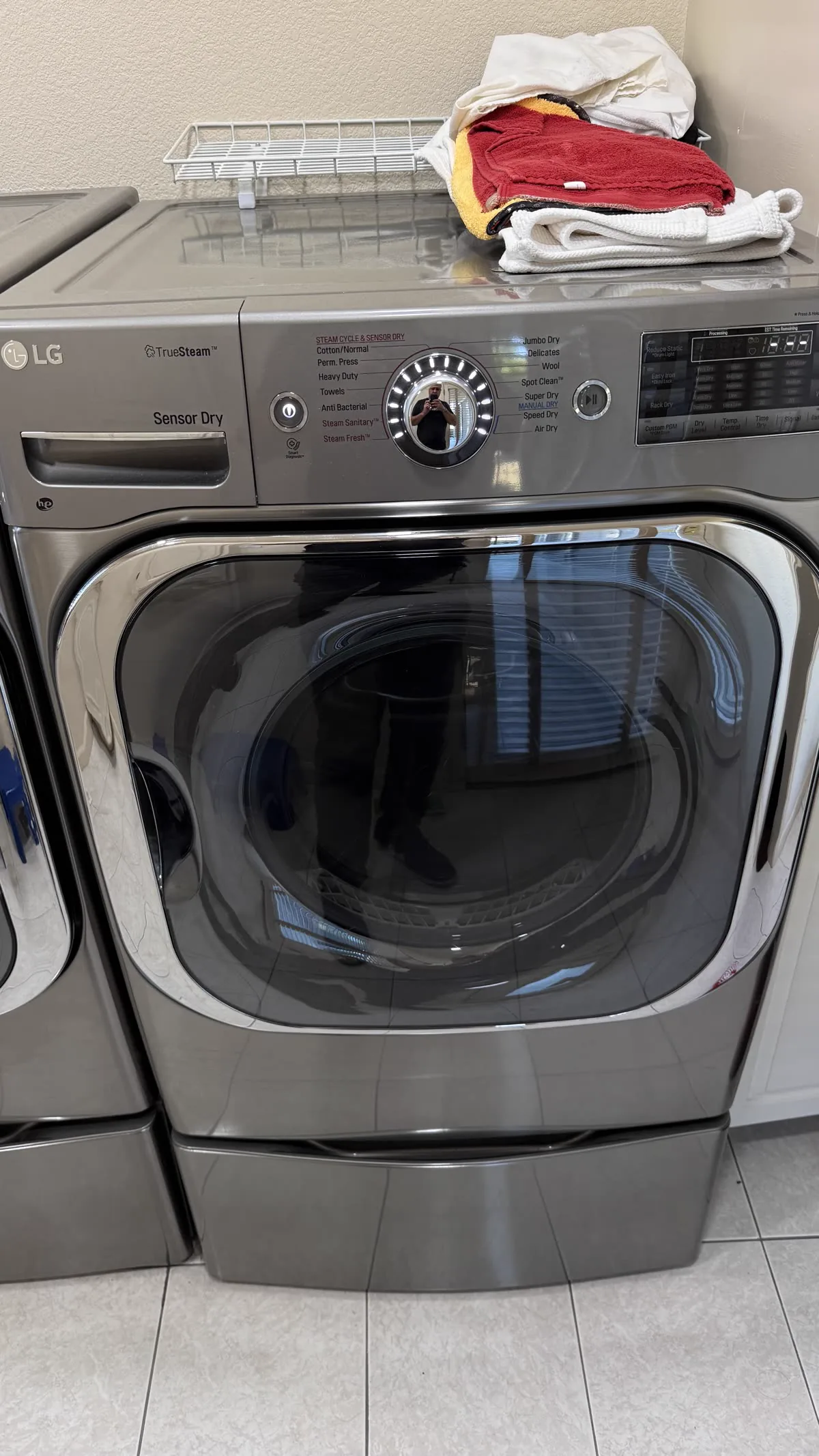
LG dryer photographed at the maintenance visit described above; exterior equipment view.
LG dryer photographed at the maintenance visit described above; exterior equipment view.
Internal lint accumulation was found during an LG maintenance visit and restricted the airflow path. Dryer cleaning was performed.
Inspection found heavy lint in the filter housing and air path together with indications of overheating. Cleaning and further checks of the thermal protection were recommended; the available record ends with that recommendation.
A warm drum shows some heat is present, but it does not prove sufficient heat throughout the cycle. Airflow, exhaust restriction, load moisture and intermittent heating are checked together.
No. A restricted air path, a duct problem or sensor and control behaviour produce long cycles with a working heater. The part is chosen after the assessment, not before.
Follow the manufacturer's guidance and your actual usage. A busy shared laundry needs attention far more often than a household machine.