Gaggenau CM470 Not Draining: Hidden Drain Line Diagnosis
A built-in Gaggenau appeared to have an appliance drainage failure. Testing showed the machine was not defective — the problem was hidden in the original external drain installation.
What was found
- Appliance
- Built-in Gaggenau CM470712/05, Type CTES33EW
- Reported issue
- Wastewater not draining reliably
- Machine condition
- Coffee machine and internal drain path operating correctly
- Root cause
- External gravity drain line running nearly horizontal, without useful fall
- Repair plan
- New drain routed down through the floor into the crawl space with a proper slope
This record documents a diagnosis and the repair plan selected from it. The new drain route is presented as planned work, not as a completed installation, and no outcome is claimed beyond what the diagnosis established.
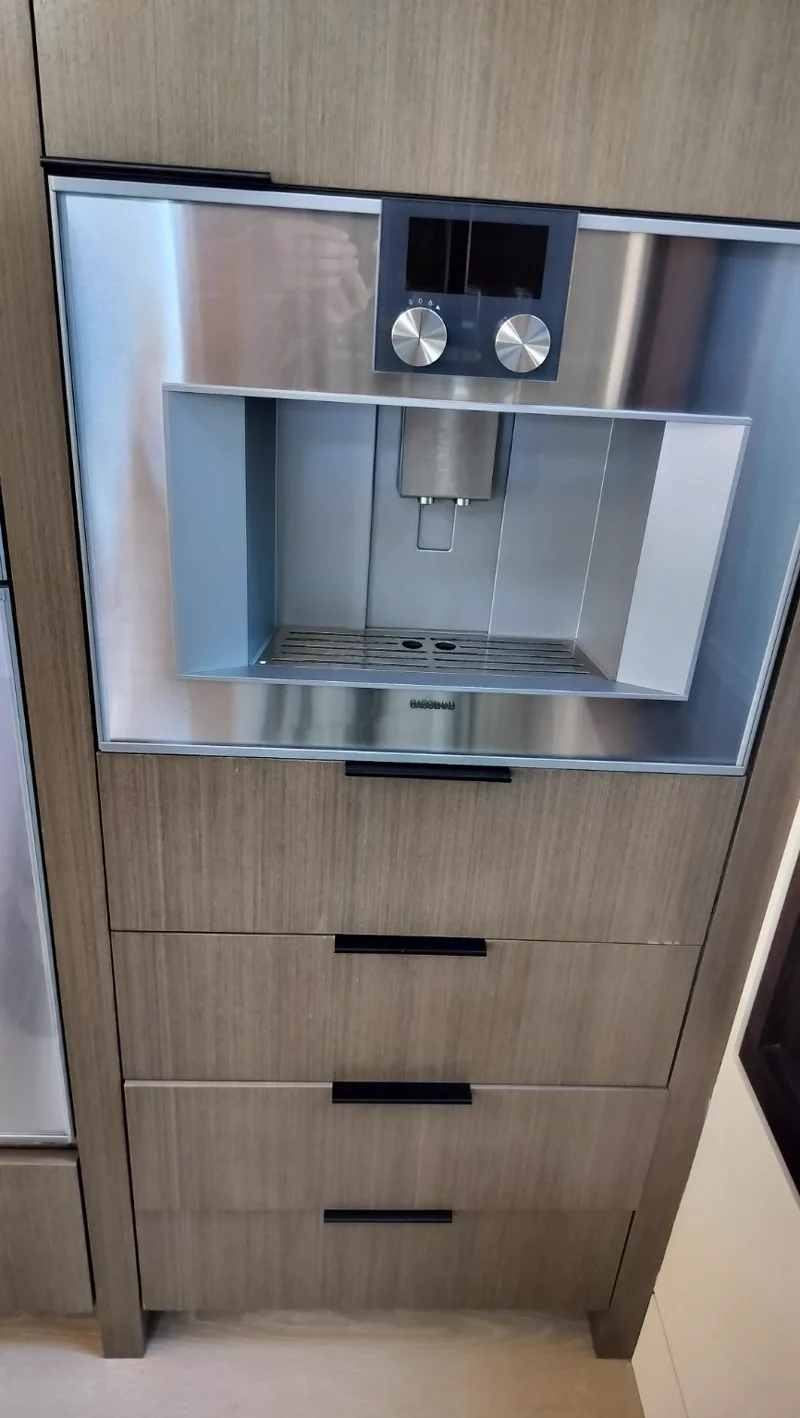
Why the Gaggenau CM470 Would Not Drain
The complaint was simple: wastewater from the built-in coffee system was not draining reliably. On a plumbed built-in machine that symptom reads like an appliance failure, because the water is visible where the appliance is and nowhere else. Owners usually expect a pump, a valve or a control board to be at fault.
In this installation, once wastewater left the machine, the concealed external line relied on gravity. From that point, flow depended on a continuous downward slope from the appliance to the connection. Without that fall, water could remain in the line and back up.
For that reason the first question on this visit was not which part to replace, but whether the machine or the installation was failing to move the water. The appliance was identified from its rating label before anything else, because guidance and parts differ by model.
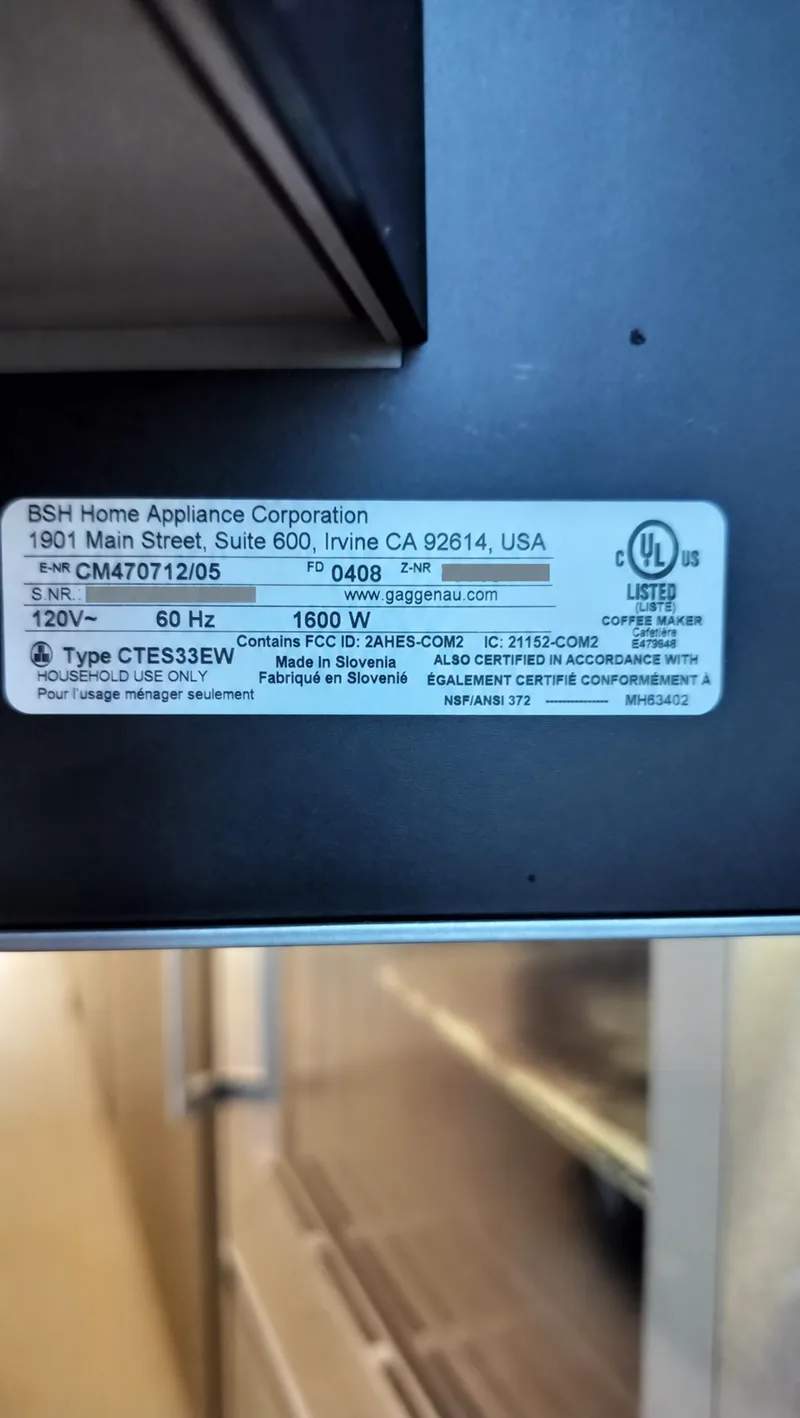
The Coffee Machine Was Not the Problem
The coffee machine was tested on its own terms. The appliance and its internal drain path operated correctly: water left the machine as designed and reached the point where the external line takes over. Nothing in the machine's own drainage behaviour explained the complaint.
That result matters commercially as much as technically. Had the visit begun with parts, the owner could have paid for a valve, a pump or electronics on an appliance that was working — and the water would still have failed to drain, because an appliance part cannot create slope in an external gravity line.
KONGRA's built-in coffee machine diagnostics separate the appliance from its installation for exactly this reason.
Tracing the Hidden Drain Behind the Cabinetry
The external drain line was concealed. It left the appliance cavity, passed through cabinetry, and disappeared into the run of built-in units — no part of it visible from the kitchen. A flexible inspection camera was used behind the machine and inside the cabinet structure to follow the actual route rather than assume it.
The camera work established two useful facts. First, where the flexible drain hose physically ran, including the openings it passed through. Second, how it lay along that route: the line was not falling away from the appliance in the way a gravity drain needs to.
The inspection camera allowed the concealed route to be traced without removing the built-in refrigerator or dismantling the finished kitchen.
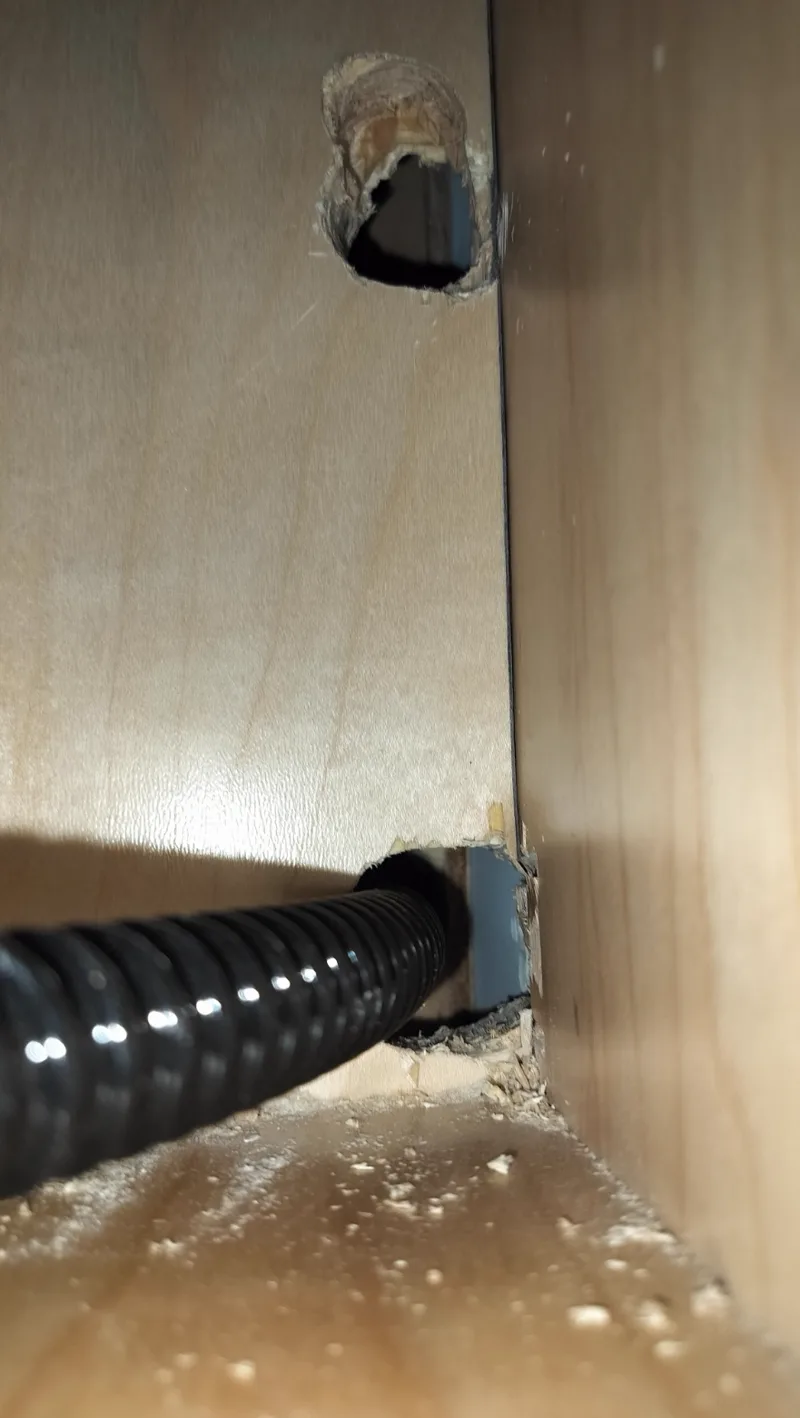
Root Cause: A Gravity Drain With No Useful Slope
The external drain line ran essentially horizontally. Without enough downward fall along its length, wastewater could not move away from the appliance reliably; it lingered in the line and drainage became intermittent or stopped.
This is an installation issue in a gravity system, and it is worth stating plainly what follows from that: replacing valves, electronics, pumps or other appliance parts would not correct an external slope problem. Neither would cleaning or descaling the machine. The line itself has to gain fall, or be re-routed so it can.
This conclusion applies to the installation documented here. Other built-in coffee machines that will not drain can have appliance-side causes, and the only way to tell the two apart is to test the machine and then trace the external route.
Avoiding a Major Kitchen Tear-Out
House plans and the kitchen layout showed where the original drain connection had been made: behind a large built-in refrigerator. Reaching that connection would have required removing expensive integrated appliances and cabinetry and disrupting a finished kitchen.
That kind of work carries its own risks — panels, custom fronts and integrated appliances do not always come out and go back without damage — and it would have added cost that has nothing to do with fixing drainage. So the plan was reconsidered rather than the kitchen being taken apart to satisfy the original route.
The Crawl-Space Drain Solution
The practical solution selected was a new drain routed downward through the floor into the crawl space beneath the kitchen. Below the floor there is room to hold a continuous gravity slope all the way to an appropriate connection, which is exactly what the original horizontal run could not provide.
It also leaves the visible kitchen intact: the integrated refrigerator and the cabinetry around the coffee system stay where they are. The work is planned in the accessible space instead of the finished space.
To be precise about status: this is the diagnosis and the selected repair plan. This page does not claim the new route has already been installed or that the repair is complete.
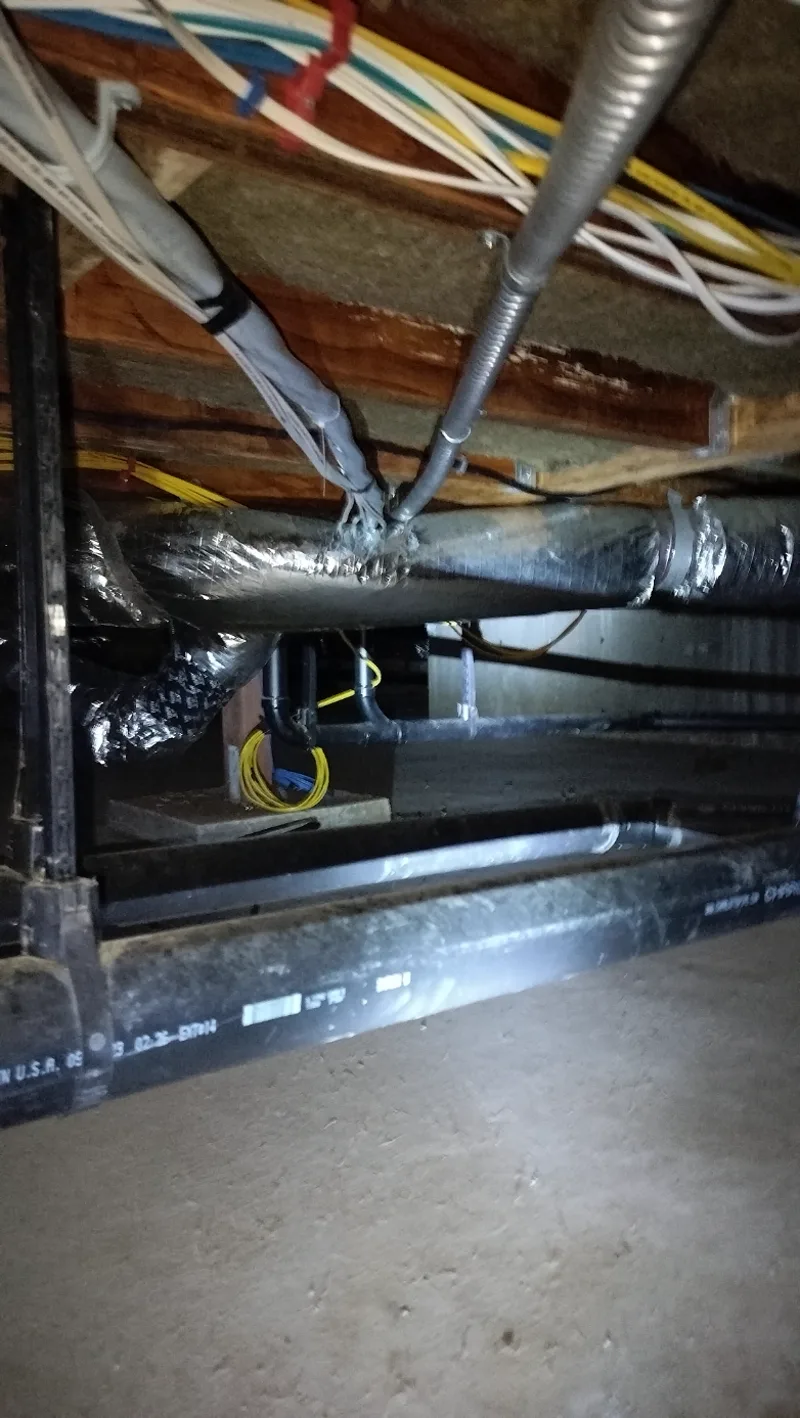
Why Diagnostic-First Service Matters
A parts-first approach would have produced an invoice and no working drain. A diagnostic-first approach produced something more useful: proof that the appliance was sound, a traced route for the hidden line, an identified root cause, and a plan that protects the kitchen.
That is how KONGRA handles high-end appliance work generally. Diagnosis is a paid on-site visit, a written estimate follows the inspection, and repair proceeds only after your approval. If the cause turns out to sit outside the appliance — as it did here — you are told that instead of being sold a part.
Gaggenau CM470 Drainage FAQ
Why was this Gaggenau CM470 not draining?+
The wastewater had nowhere to go. The external gravity drain line behind the cabinetry ran essentially horizontally, without enough downward fall, so water did not move away reliably. The fault was in the drain installation, not in the coffee machine.
Was the coffee machine itself defective?+
No. The appliance and its internal drain path operated correctly during testing. Replacing valves, pumps, electronics or other appliance parts would not have corrected an external slope problem.
Can a built-in coffee machine drain problem come from installation?+
Yes. A plumbed built-in coffee system depends on the drain line that was installed behind the cabinetry. If that line has no useful fall, is kinked, or terminates in a poor connection, the appliance can behave as if it has failed. That is why the external route is traced before parts are recommended.
Did the kitchen need to be dismantled?+
The original connection was located behind a large built-in refrigerator, so reaching it would have meant removing expensive integrated appliances and cabinetry in a finished kitchen. That was avoided by planning a different route for the drain.
What repair plan was selected?+
A new drain routed downward through the floor into the crawl space, where a continuous gravity slope can be maintained to an appropriate connection. This is the selected plan from the diagnosis; it is presented here as a documented case and repair plan, not as a completed installation.
Built-in coffee system not draining?
KONGRA provides independent diagnostics and repair for Gaggenau, Viking, Miele, Sub-Zero, Wolf and Thermador equipment in San Jose, Los Gatos and the greater Bay Area. Diagnosis is a paid visit and a written estimate follows the inspection.
Book Online is the fastest way to reserve a time. You can also send a service request, call, or continue on WhatsApp.